Dear Blogger,
Thank you for being relatively user-friendly when I was new to blogging. Thanks for never giving me any humongous problems. But after 2 years of using this site, I am switching to Xanga. It has many more options and I don't like having to search my brain for my old username on here each time I try to log in. So if you'd like to visit me and read my posts still, my new site is HERE.
Love you all,
Awesomepossum
Saturday, August 22, 2009

Saturday, May 30, 2009
End of the Year Post
The most important thing I learned this year was about Martin Luther. It is interesting to see how the life of a man who lived hundreds of years ago is similar to our own lives.
The final event that began the Protestant Reformation occurred on October 31, 1517, when Martin Luther nailed his 95 Theses on the Wittenberg church door. He protested Johann Tetzil’s selling of indulgences, and accused the church of heresy after heresy. However, the Roman Catholic Church was stubborn and condemned him as a heretic. This caused a huge outrage in Europe, and thus started the Protestant Reformation.
Luther’s life is comparable to some Christians’ lives today. Luther stuck up for what was right, telling the church that it was wrong and that its teachings did not correspond with the Bible. They rejected Martin and called him “heretic.”
Today, true Christians stick up for what is right, telling the culture that it is wrong and that its teachings do not correspond with reality. The culture condemns such Christians as “religious.” The difference is that the culture today is subtler; so many Christians don’t notice what is happening.
What can we do to solve this problem? Luther’s example shows that we need to reveal the truth to the public. He wrote out what the Bible said and nailed it in full view of everyone. Copies were made, and the word spread from there.
Luther was not afraid of being judged; when he was taken to court he would not recant what he said, even if it meant sparing his own life. Luther wanted everyone to know the truth, and would not tolerate the deception of the church. The solution to our problem today can be found in his life. As Gandhi would say, “Be the change you want to see in the world” and spread the word while you’re at it.
The final event that began the Protestant Reformation occurred on October 31, 1517, when Martin Luther nailed his 95 Theses on the Wittenberg church door. He protested Johann Tetzil’s selling of indulgences, and accused the church of heresy after heresy. However, the Roman Catholic Church was stubborn and condemned him as a heretic. This caused a huge outrage in Europe, and thus started the Protestant Reformation.
Luther’s life is comparable to some Christians’ lives today. Luther stuck up for what was right, telling the church that it was wrong and that its teachings did not correspond with the Bible. They rejected Martin and called him “heretic.”
Today, true Christians stick up for what is right, telling the culture that it is wrong and that its teachings do not correspond with reality. The culture condemns such Christians as “religious.” The difference is that the culture today is subtler; so many Christians don’t notice what is happening.
What can we do to solve this problem? Luther’s example shows that we need to reveal the truth to the public. He wrote out what the Bible said and nailed it in full view of everyone. Copies were made, and the word spread from there.
Luther was not afraid of being judged; when he was taken to court he would not recant what he said, even if it meant sparing his own life. Luther wanted everyone to know the truth, and would not tolerate the deception of the church. The solution to our problem today can be found in his life. As Gandhi would say, “Be the change you want to see in the world” and spread the word while you’re at it.
Saturday, April 25, 2009
The English Bill of Rights
“In 1688-89 the English people drove King James II from the throne in the ‘Glorious Revolution.’ This peaceable (and apparently bloodless) revolution brought an end to the old theory of the divine right of kings and clearly established the supremacy of Parliament. To that end, in 1689, Parliament enacted the English Bill of Rights.” (source)
Mary II was then offered the crown because she was the daughter of James II. However, her husband (and cousin), William III, found it too humiliating to rule under his wife. He and Mary were accordingly offered the choice of ruling together. This was decided upon, and the new king and queen jointly ruled England. (source)
The English Bill of Rights told the king that passing, suspending, dispensing of, or executing laws, charging people for religious purposes, taxing people for personal purposes, or having an army in times of peace was illegal unless approved by Parliament. It also said that the subjects were free to petition the king, Protestants were allowed to keep arms for defense, elections for members of Parliament should be free and that the goings-on in Parliament would be free, and that parliament meetings should be held frequently. What's more, the bill attempted to make the courts fairer by stating that cruel punishments, high fines and/or a great fine for bail should not be given, and it tried to make the judging fairer. (source)
The English Bill of Rights in 1689 was an inspiration for the American Bill of Rights in 1791. There are many similarities. For example, the eighth American amendment says, “Excessive bail shall not be required, nor excessive fines imposed, nor cruel and unusual punishments inflicted.” The English Bill of Rights reads, “Excessive bail ought not to be required, nor excessive fines imposed, nor cruel and unusual punishments inflicted.” (source) (source, Amar 3, Applewood 1)
The English Bill of Rights decreased the power of the king and heightened the power of Parliament. A monarchy was still in place, and the foundations had not been set for a democracy. However, the separation of powers in England was slowly beginning to take place.
Works Cited
Amar, Akhil Reed. The Bill of Rights: Creation and Reconstruction. Connecticut, U.S.A: Yale University. 1998.
Applewood Books, The Bill of Rights: With Writings That Formed Its Foundation. Ingram Pub Services. 2006.
Mary II was then offered the crown because she was the daughter of James II. However, her husband (and cousin), William III, found it too humiliating to rule under his wife. He and Mary were accordingly offered the choice of ruling together. This was decided upon, and the new king and queen jointly ruled England. (source)
The English Bill of Rights told the king that passing, suspending, dispensing of, or executing laws, charging people for religious purposes, taxing people for personal purposes, or having an army in times of peace was illegal unless approved by Parliament. It also said that the subjects were free to petition the king, Protestants were allowed to keep arms for defense, elections for members of Parliament should be free and that the goings-on in Parliament would be free, and that parliament meetings should be held frequently. What's more, the bill attempted to make the courts fairer by stating that cruel punishments, high fines and/or a great fine for bail should not be given, and it tried to make the judging fairer. (source)
The English Bill of Rights in 1689 was an inspiration for the American Bill of Rights in 1791. There are many similarities. For example, the eighth American amendment says, “Excessive bail shall not be required, nor excessive fines imposed, nor cruel and unusual punishments inflicted.” The English Bill of Rights reads, “Excessive bail ought not to be required, nor excessive fines imposed, nor cruel and unusual punishments inflicted.” (source) (source, Amar 3, Applewood 1)
The English Bill of Rights decreased the power of the king and heightened the power of Parliament. A monarchy was still in place, and the foundations had not been set for a democracy. However, the separation of powers in England was slowly beginning to take place.
Works Cited
Amar, Akhil Reed. The Bill of Rights: Creation and Reconstruction. Connecticut, U.S.A: Yale University. 1998.
Applewood Books, The Bill of Rights: With Writings That Formed Its Foundation. Ingram Pub Services. 2006.
Friday, April 10, 2009
The Thirty Years' War
Though the Thirty Year’s War started out as a religious war, it was inevitable that it would end in a mess of politics.
“In 1618, a local Bohemian conflict on the use of churches in rural regions culminated in the Defenestration of Prague. Two Catholic aristocrats were thrown out of a window of the (Protestant) Bohemian chancellery.” (source) This act on May 23, 1618 “launched the Thirty Years’ War.” (Bonney 13)
The Thirty Years’ War is sometimes known as the “last of the religious wars” even though it would not be the end of these struggles. It was a Protestant rebellion against the authority of the Hapsburg Holy Roman Emperors, who were Catholic. Soon, politics became involved as well and it wasn’t just a battle for faith anymore. (source, Wedgwood 1)
“This ‘30 Years’ War’ is considered one of the most devastating wars of all time. One third of the people of Europe died during those 3 decades, either from the use of weapons, famine or epidemics. One third of Europe was devastated and remained so for another generation.” (source) Most of the war was fought on German soil, and therefore much of the country was destroyed. (source)
All attempts at making peace had failed, but finally the Peace of Westphalia was successful and settled on October 24, 1648. It said that all German states could determine their own religions. “The chief participants in the negotiations were the allies Sweden and France; their opponents, Spain and the Holy Roman Empire; and the various parts of the empire (which had been riven by the war) together with the newly independent Netherlands.” (source) “It marked the end of the Holy Roman Empire as an effective institution and inaugurated the modern European state system.” (source)
“The chief results of the Thirty Years’ War were: the foundation and recognition of a unified Austria under the rule of the German Habsburgs; the revival, in a certain doubtful sense though, of the Holy Roman Empire; the establishment of Sweden on German soil; the permanent weakening of Denmark; the renunciation by Holland of all efforts to drive Spain out of southern Netherlands; [and] an enormous increase of the power of France.” (source)
Works Cited
Bonney, Richard. The Thirty Years' War 1618-1648. Great Britain: Osprey Publishing. 2002.
Wedgwood, C.V. & Grafton, Anthony. The Thirty Years War. Broadway, New York: The New York Review of Books. 2005.
“In 1618, a local Bohemian conflict on the use of churches in rural regions culminated in the Defenestration of Prague. Two Catholic aristocrats were thrown out of a window of the (Protestant) Bohemian chancellery.” (source) This act on May 23, 1618 “launched the Thirty Years’ War.” (Bonney 13)
The Thirty Years’ War is sometimes known as the “last of the religious wars” even though it would not be the end of these struggles. It was a Protestant rebellion against the authority of the Hapsburg Holy Roman Emperors, who were Catholic. Soon, politics became involved as well and it wasn’t just a battle for faith anymore. (source, Wedgwood 1)
“This ‘30 Years’ War’ is considered one of the most devastating wars of all time. One third of the people of Europe died during those 3 decades, either from the use of weapons, famine or epidemics. One third of Europe was devastated and remained so for another generation.” (source) Most of the war was fought on German soil, and therefore much of the country was destroyed. (source)
All attempts at making peace had failed, but finally the Peace of Westphalia was successful and settled on October 24, 1648. It said that all German states could determine their own religions. “The chief participants in the negotiations were the allies Sweden and France; their opponents, Spain and the Holy Roman Empire; and the various parts of the empire (which had been riven by the war) together with the newly independent Netherlands.” (source) “It marked the end of the Holy Roman Empire as an effective institution and inaugurated the modern European state system.” (source)
“The chief results of the Thirty Years’ War were: the foundation and recognition of a unified Austria under the rule of the German Habsburgs; the revival, in a certain doubtful sense though, of the Holy Roman Empire; the establishment of Sweden on German soil; the permanent weakening of Denmark; the renunciation by Holland of all efforts to drive Spain out of southern Netherlands; [and] an enormous increase of the power of France.” (source)
Works Cited
Bonney, Richard. The Thirty Years' War 1618-1648. Great Britain: Osprey Publishing. 2002.
Wedgwood, C.V. & Grafton, Anthony. The Thirty Years War. Broadway, New York: The New York Review of Books. 2005.
Friday, December 5, 2008
Events leading to the Protestant Reformation
The Protestant Reformation could never have happened if not for three key factors that paved its way. These three events were the main set-ups for the Reformation, and if any one of them had not occurred, there’s a good chance that the Reformation would never have occurred either.
The first event was the Renaissance; an important key to setting up the Reformation. “The term ‘Renaissance’ literally means ‘rebirth’ and is the period in European civilization immediately following the Middle Ages, conventionally held to have been characterized by a surge of interest in classical learning and values. The Renaissance also witnessed the discovery and exploration of new continents, the substitution of the Copernican for the Ptolemaic system of astronomy, the decline of the feudal system and the growth of commerce, and the invention or application of such potentially powerful innovations as paper, printing, the mariner's compass, and gunpowder. To the scholars and thinkers of the day, however, it was primarily a time of the revival of classical learning and wisdom after a long period of cultural decline and stagnation.” (source) “The Renaissance was the time in history when people began thinking, reading, and reasoning for themselves-apart from the Roman Catholic Church.” (Jim 62)
Another important factor leading to the Reformation was the decline of the papacy. “After the reign of Pope Innocent III (1198-1216,) the papacy lost much of its power and prestige, and starting at the beginning of the fourteenth century, it took a nose dive. …The papacy was weighted down with corruption, immorality, materialism, and secularism, so much so that at the close of the fifteenth century, it appeared there was little chance for reformation from within.” (Jim 59) The lower church leaders also became corrupted. The church was not the same, and many European believers thought that the church and Europe both were under God’s judgment. (source, Jim 59)
Peter Waldo, John Wycliffe, Jan Hus, Johann Gutenberg, and Girolamo Savonarola all paved the way for Martin Luther’s teachings in the 1500s. Peter Waldo’s followers were excommunicated, persecuted, and burned as heretics. John Wycliffe attempted to translate the Bible into English, creating the Wycliffe Bible. Jan Hus was burned at the stake, the fire being fueled by his own books. Johann Gutenberg developed movable type, so the Reformer’s teachings could be spread. It is estimated that he printed about 180 copies of the Bible. Girolamo Savonarola sent kids to collect all the worldly items that were distracting people from living in a godly manner. The pile of junk was 15 stories high! (source)
The final event that began the Protestant Reformation occurred on October 31, 1517, when Martin Luther nailed his 95 Theses on the Wittenberg church door. He protested Johann Tetzil’s selling of indulgences, and accused the church of heresy after heresy. However, the Roman Catholic Church was stubborn and condemned him as a heretic. This caused a huge outrage in Europe, and thus started the Protestant Reformation. (source, source, Jackson 69, 74)
Works Cited
Jackson, Dave & Neta. Hero Tales. Minneapolis, Minnesota: Bethany House Publishers. 1996.
Jim Bell, James. Complete Idiot's Guide to the Reformation & Protestantism, The. Indianapolis, Indiana: Alpha Books. 2002.
The first event was the Renaissance; an important key to setting up the Reformation. “The term ‘Renaissance’ literally means ‘rebirth’ and is the period in European civilization immediately following the Middle Ages, conventionally held to have been characterized by a surge of interest in classical learning and values. The Renaissance also witnessed the discovery and exploration of new continents, the substitution of the Copernican for the Ptolemaic system of astronomy, the decline of the feudal system and the growth of commerce, and the invention or application of such potentially powerful innovations as paper, printing, the mariner's compass, and gunpowder. To the scholars and thinkers of the day, however, it was primarily a time of the revival of classical learning and wisdom after a long period of cultural decline and stagnation.” (source) “The Renaissance was the time in history when people began thinking, reading, and reasoning for themselves-apart from the Roman Catholic Church.” (Jim 62)
Another important factor leading to the Reformation was the decline of the papacy. “After the reign of Pope Innocent III (1198-1216,) the papacy lost much of its power and prestige, and starting at the beginning of the fourteenth century, it took a nose dive. …The papacy was weighted down with corruption, immorality, materialism, and secularism, so much so that at the close of the fifteenth century, it appeared there was little chance for reformation from within.” (Jim 59) The lower church leaders also became corrupted. The church was not the same, and many European believers thought that the church and Europe both were under God’s judgment. (source, Jim 59)
Peter Waldo, John Wycliffe, Jan Hus, Johann Gutenberg, and Girolamo Savonarola all paved the way for Martin Luther’s teachings in the 1500s. Peter Waldo’s followers were excommunicated, persecuted, and burned as heretics. John Wycliffe attempted to translate the Bible into English, creating the Wycliffe Bible. Jan Hus was burned at the stake, the fire being fueled by his own books. Johann Gutenberg developed movable type, so the Reformer’s teachings could be spread. It is estimated that he printed about 180 copies of the Bible. Girolamo Savonarola sent kids to collect all the worldly items that were distracting people from living in a godly manner. The pile of junk was 15 stories high! (source)
The final event that began the Protestant Reformation occurred on October 31, 1517, when Martin Luther nailed his 95 Theses on the Wittenberg church door. He protested Johann Tetzil’s selling of indulgences, and accused the church of heresy after heresy. However, the Roman Catholic Church was stubborn and condemned him as a heretic. This caused a huge outrage in Europe, and thus started the Protestant Reformation. (source, source, Jackson 69, 74)
Works Cited
Jackson, Dave & Neta. Hero Tales. Minneapolis, Minnesota: Bethany House Publishers. 1996.
Jim Bell, James. Complete Idiot's Guide to the Reformation & Protestantism, The. Indianapolis, Indiana: Alpha Books. 2002.
Saturday, November 22, 2008
Louis XIV (The Sun King of France)
King Louis XIV was born on September 5, 1638. “He ascended to the throne a few months before his fifth birthday, but did not assume actual personal control of the government until the death of his prime minister (Premier ministre), the Italian Jules Cardinal Mazarin, in 1661.” (source)
“Among many names, Louis the XIVth was also popularly known as The Sun King (in French le Roi Soleil) because of the idea that, just as the planets revolve around the Sun, so too should France and the court revolve around him. As a result, he was commonly associated with Apollo Helios, the Greco-Roman god of the Sun.” (source)
In 1660, the king married Maria Theresa. He was kind to her, but very unfaithful. He pursued his sister-in-law, then her maid-of-honor, then that maid’s friend, then the governess that friend hired for her children. The governess was Madame de Maintenon, and strangely enough, she became friends with the queen. In 1683, the queen died in her arms, and Madame de Maintenon secretly married Louis XIV. However, she could not become the queen. (source)
“In 1667 Louis XIV decided to move the royal household and government from Paris to Versailles. The center of his new palace was the hunting lodge his father had built in 1624. Built in a Boroque style, the Palace of Versailles was enlarged by architects Le Brun and Le Vau. King Louis XIV, the Sun King, had an enormous influence on the art and architecture of the time. Boroque architecture was fairly geometric which was ‘in keeping with the French political system—absolute monarchy personified by King Louis XIV.’ Because he is referred to as the Sun King, the architects gave the palace a room with ‘solar illusions.’ This Hall of Mirrors added to the elegant and majestic quality of the Boroque palace. Many years later in 1919, Germany ended the war by signing the Treaty of Versailles in the Hall of Mirrors. Another characteristic element of the Boroque time period was the elaborate gardens. To enhance his Palace of Versailles, King Louis XIV hired landscape architect Andre Le Notre to design the Boroque gardens surrounding the large estate. Pools and fountains, which also bedeck the vast landscape, are other features relevant to Boroque style. In sum, the king’s influence on architecture of the time is extremely evident in the Palace of Versailles.” (source)

There was also quite a bit of war during the reign of Louis XIV. The Thirty Years War ended in 1648, and from 1648-1653, there was civil war and unrest. In 1658, England helped France defeat Spain. In 1667, there was the War of Devolution with Spain, from 1688-1697, the Nine Years War, and in 1701-1714, the War of the Spanish Succession. (source, Lewis 76)
Between 1701-1712, four of the king’s loved-ones died. He filled his final years with persecution of the Protestants, and on September 1, 1715, King Louis XIV died from gangrene. (McConville 20)
Works Cited
Lewis, W. H. The Splendid Century: Life in the France of Louis XIV. Prospect Heights, Illinois: Waveland Press. 1953.
McConville, Brendan. The King’s Three Faces: The Rise and Fall of Royal America, 1688-1776. Chapel Hill, North Carolina: University of North Carolina Press. 2006.
“Among many names, Louis the XIVth was also popularly known as The Sun King (in French le Roi Soleil) because of the idea that, just as the planets revolve around the Sun, so too should France and the court revolve around him. As a result, he was commonly associated with Apollo Helios, the Greco-Roman god of the Sun.” (source)
In 1660, the king married Maria Theresa. He was kind to her, but very unfaithful. He pursued his sister-in-law, then her maid-of-honor, then that maid’s friend, then the governess that friend hired for her children. The governess was Madame de Maintenon, and strangely enough, she became friends with the queen. In 1683, the queen died in her arms, and Madame de Maintenon secretly married Louis XIV. However, she could not become the queen. (source)
“In 1667 Louis XIV decided to move the royal household and government from Paris to Versailles. The center of his new palace was the hunting lodge his father had built in 1624. Built in a Boroque style, the Palace of Versailles was enlarged by architects Le Brun and Le Vau. King Louis XIV, the Sun King, had an enormous influence on the art and architecture of the time. Boroque architecture was fairly geometric which was ‘in keeping with the French political system—absolute monarchy personified by King Louis XIV.’ Because he is referred to as the Sun King, the architects gave the palace a room with ‘solar illusions.’ This Hall of Mirrors added to the elegant and majestic quality of the Boroque palace. Many years later in 1919, Germany ended the war by signing the Treaty of Versailles in the Hall of Mirrors. Another characteristic element of the Boroque time period was the elaborate gardens. To enhance his Palace of Versailles, King Louis XIV hired landscape architect Andre Le Notre to design the Boroque gardens surrounding the large estate. Pools and fountains, which also bedeck the vast landscape, are other features relevant to Boroque style. In sum, the king’s influence on architecture of the time is extremely evident in the Palace of Versailles.” (source)

There was also quite a bit of war during the reign of Louis XIV. The Thirty Years War ended in 1648, and from 1648-1653, there was civil war and unrest. In 1658, England helped France defeat Spain. In 1667, there was the War of Devolution with Spain, from 1688-1697, the Nine Years War, and in 1701-1714, the War of the Spanish Succession. (source, Lewis 76)
Between 1701-1712, four of the king’s loved-ones died. He filled his final years with persecution of the Protestants, and on September 1, 1715, King Louis XIV died from gangrene. (McConville 20)
Works Cited
Lewis, W. H. The Splendid Century: Life in the France of Louis XIV. Prospect Heights, Illinois: Waveland Press. 1953.
McConville, Brendan. The King’s Three Faces: The Rise and Fall of Royal America, 1688-1776. Chapel Hill, North Carolina: University of North Carolina Press. 2006.
Friday, November 14, 2008
The Early Development of Paris and London
Early Paris


Paris, originally a small fishing island, was founded over 2,000 years ago by the Gauls of the Parisii tribe. However, Rome had its eye on it. “The Roman conquest became final in 52 B.C., when Vercingetorix, who had succeeded in uniting the Gauls, was defeated [at] Alesia.” (Mokhtefi 4) “Julius Caesar's army took over the city in 52 B.C. and the Roman influence lingered well into the fifth century A.D. when the Frankish king Clovis I once again united his kingdom, and made Paris its capital. In 987 A.D. when Hugh Capet, Count of Paris, became the King of France, Paris' position as the hub of French government was secured.” (source) (source)
Also around 2,000 years ago, the small city of Londinium was founded by the Romans. The aggressive woman warrior Boadicea conquered the city in 61 A.D. but it was taken back some years later. (source, source)
When “William Duke of Normandy defeated the English king…it brought French control, language and culture to England, profoundly changing the language [and] making the English language what it is today. The Tudor Dynasty was established with the conquest of Henry over the French in 1485.” (source)
“In 1123 St. Bartholomew's Priory was founded in the city, and other monastic houses quickly followed…In 1176 the first stone London Bridge was built, mere yards from the original Roman bridge across the Thames.” (source) In France, “work on Notre Dame Cathedral was started in the 12th century (and finished 200 years later.)” (source)
“London, long the largest British town-did not replace Paris as the largest city in western Europe until the seventeenth century.” (Palliser 2)
Early Paris and early London had a lot in common. Though physical distance separated these two places, they both went through similar situations at the same times, though under different rulers and conditions.
Works Cited
Mokhtefi, Elaine. Paris: An Illustrated History. New York: Hippocrene Books. 2002.
Palliser, David M. Towns and Local Communities in Medieval and Early Modern England. Burlington, VT: Ashgate Publishing Company. 2006.


St. Bartholomew's Priory and Notre Dame Cathedral


Paris, originally a small fishing island, was founded over 2,000 years ago by the Gauls of the Parisii tribe. However, Rome had its eye on it. “The Roman conquest became final in 52 B.C., when Vercingetorix, who had succeeded in uniting the Gauls, was defeated [at] Alesia.” (Mokhtefi 4) “Julius Caesar's army took over the city in 52 B.C. and the Roman influence lingered well into the fifth century A.D. when the Frankish king Clovis I once again united his kingdom, and made Paris its capital. In 987 A.D. when Hugh Capet, Count of Paris, became the King of France, Paris' position as the hub of French government was secured.” (source) (source)
Also around 2,000 years ago, the small city of Londinium was founded by the Romans. The aggressive woman warrior Boadicea conquered the city in 61 A.D. but it was taken back some years later. (source, source)
When “William Duke of Normandy defeated the English king…it brought French control, language and culture to England, profoundly changing the language [and] making the English language what it is today. The Tudor Dynasty was established with the conquest of Henry over the French in 1485.” (source)
“In 1123 St. Bartholomew's Priory was founded in the city, and other monastic houses quickly followed…In 1176 the first stone London Bridge was built, mere yards from the original Roman bridge across the Thames.” (source) In France, “work on Notre Dame Cathedral was started in the 12th century (and finished 200 years later.)” (source)
“London, long the largest British town-did not replace Paris as the largest city in western Europe until the seventeenth century.” (Palliser 2)
Early Paris and early London had a lot in common. Though physical distance separated these two places, they both went through similar situations at the same times, though under different rulers and conditions.
Works Cited
Mokhtefi, Elaine. Paris: An Illustrated History. New York: Hippocrene Books. 2002.
Palliser, David M. Towns and Local Communities in Medieval and Early Modern England. Burlington, VT: Ashgate Publishing Company. 2006.
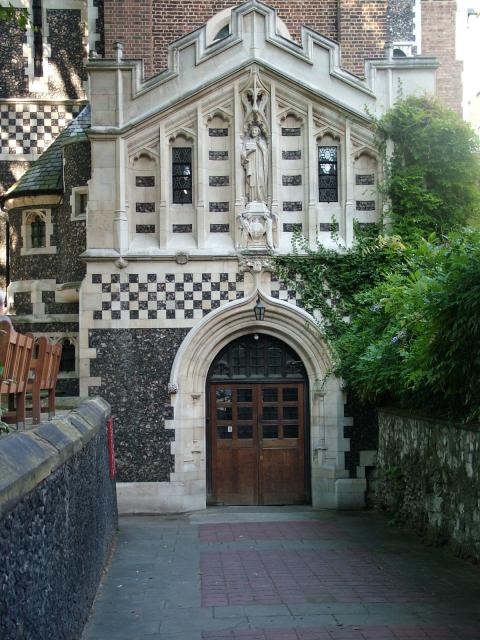
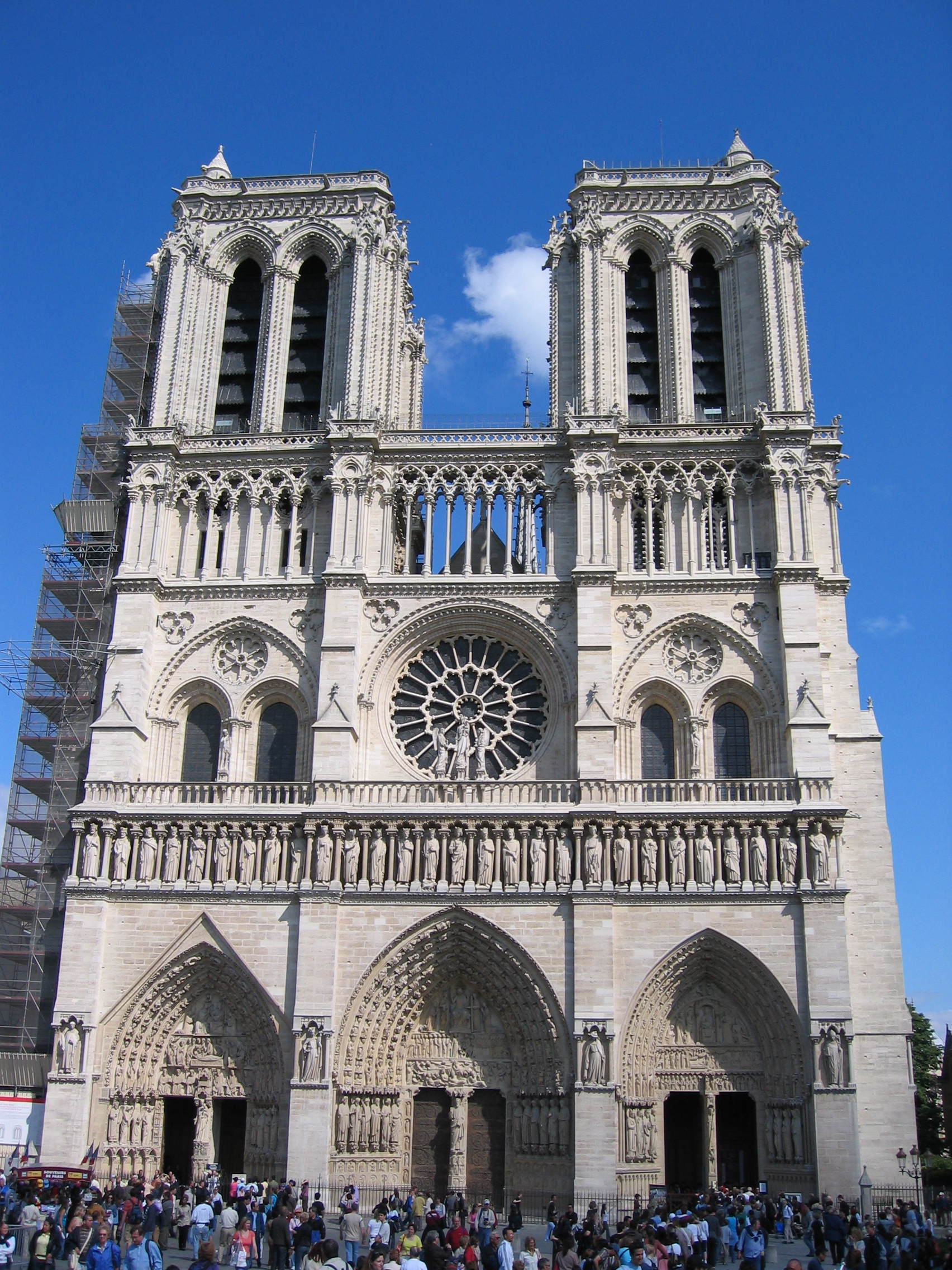
St. Bartholomew's Priory and Notre Dame Cathedral
Saturday, November 8, 2008
The Bubonic Plague
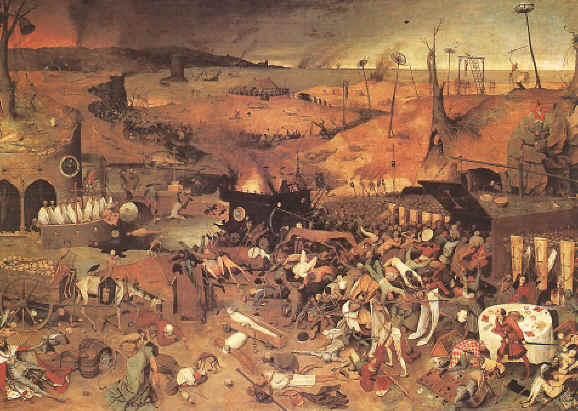
Most people have heard the children’s song “Ring Around the Rosy.” Little children sing it merrily, holding hands and turning about in a circle. When they reach the end of the song, the kids let go of each other and sit (or fall) down. However, most people don’t know that this song is actually about the Black Death. (Morbid little kindergarteners.) (Cantor 6)
“Ring around the rosy,
[refers to the rosy-red (or purple-ish) round rash marks on the skin —one of the first signs a person had the plague]
A pocket full of posies;
[one of the superstitious ways used by people in the Middle Ages to try and fend off the plague was to stuff their pockets with posies (flowers)]
Atischoo, atischoo,
[sneezing was also an early sign of the plague if it was a pneumonic plague; however, not all types of plague involved sneezing]
or, Ashes, ashes
[the dead were often cremated]
We all fall down.
[most of the people stricken with the plague died]” (source)
“The plague came to Europe in the fall of 1347. By 1350 it had largely passed out of western Europe. In the space of two years, one out of every three people was dead. Nothing like that has happened before or since. These general numbers disguise the uneven nature of the epidemic. Some areas suffered little, others suffered far more. Here are some examples. Between 45% and 75% of Florence died in a single year. One-third died in the first six months. Its entire economic system collapsed for a time. In Venice, which kept excellent records, 60% died over the course of 18 months: five hundred to six hundred a day at the height.” (source)

“Medical professionals calculated that dead bodies, poor ventilation, and the close quarters so common in medieval towns brought plague [besides the main cause of fleas on rats.] This led to government regulations, in particular, the decision to bury cadavers outside the town walls. Priests were told to keep sermons short and disperse congregations early.” (Gottfried 69) The people would burn the corpses, clothes, and bedding, then spray the bedroom with incense. Good smells were believed to help fight off disease.
“The disease struck and killed people with terrible speed. The Italian writer Boccaccio said its victims often ‘ate lunch with their friends and dinner with their ancestors in paradise.’” (source) “Symptoms [of the plague] include high fever, chills, headache, exhaustion, a skin rash and the namesake "buboes" — hideously enlarged and swollen lymph nodes.” (source)
“The Bubonic Plague continued to affect cities from time to time for hundreds of years. It still exists and is common among rodents. We have a cure for the disease, but occasionally people in isolated places still die from the Bubonic Plague.” (source)
Works Cited
Cantor, Norman. In the Wake of the Plague: The Black Death & the World it Made. New York: The Free Press. 2001.
Gottfried, Robert S. The Black Death: Natural and Human Disaster in Medieval Europe. New York: The Free Press. 1983.

“Ring around the rosy,
[refers to the rosy-red (or purple-ish) round rash marks on the skin —one of the first signs a person had the plague]
A pocket full of posies;
[one of the superstitious ways used by people in the Middle Ages to try and fend off the plague was to stuff their pockets with posies (flowers)]
Atischoo, atischoo,
[sneezing was also an early sign of the plague if it was a pneumonic plague; however, not all types of plague involved sneezing]
or, Ashes, ashes
[the dead were often cremated]
We all fall down.
[most of the people stricken with the plague died]” (source)
“The plague came to Europe in the fall of 1347. By 1350 it had largely passed out of western Europe. In the space of two years, one out of every three people was dead. Nothing like that has happened before or since. These general numbers disguise the uneven nature of the epidemic. Some areas suffered little, others suffered far more. Here are some examples. Between 45% and 75% of Florence died in a single year. One-third died in the first six months. Its entire economic system collapsed for a time. In Venice, which kept excellent records, 60% died over the course of 18 months: five hundred to six hundred a day at the height.” (source)

“Medical professionals calculated that dead bodies, poor ventilation, and the close quarters so common in medieval towns brought plague [besides the main cause of fleas on rats.] This led to government regulations, in particular, the decision to bury cadavers outside the town walls. Priests were told to keep sermons short and disperse congregations early.” (Gottfried 69) The people would burn the corpses, clothes, and bedding, then spray the bedroom with incense. Good smells were believed to help fight off disease.
“The disease struck and killed people with terrible speed. The Italian writer Boccaccio said its victims often ‘ate lunch with their friends and dinner with their ancestors in paradise.’” (source) “Symptoms [of the plague] include high fever, chills, headache, exhaustion, a skin rash and the namesake "buboes" — hideously enlarged and swollen lymph nodes.” (source)
“The Bubonic Plague continued to affect cities from time to time for hundreds of years. It still exists and is common among rodents. We have a cure for the disease, but occasionally people in isolated places still die from the Bubonic Plague.” (source)
Works Cited
Cantor, Norman. In the Wake of the Plague: The Black Death & the World it Made. New York: The Free Press. 2001.
Gottfried, Robert S. The Black Death: Natural and Human Disaster in Medieval Europe. New York: The Free Press. 1983.
Friday, October 31, 2008
What was the Tudor Dynasty?
“The Tudor dynasty ruled England from 1485 to 1603.” (source)
“The founder of the Tudor Dynasty was Henry VII, who emerged triumphant after the brutal Wars of the Roses which split England between the houses of Lancaster and York. This period of civil war is named for the symbols of the warring houses; Lancaster was represented by a red rose, while York was represented by a white rose. Henry VII, a relative of the House of Lancaster, managed to secure the throne in 1485, establishing the Tudor Dynasty, and he rapidly set about consolidating power in the hands of the monarch, stripping the nobility of many of their powers in the interest of avoiding future revolts and civil wars. Henry VII wisely married Elizabeth York, uniting the feuding houses, and he created a distinct symbol for the Tudor Dynasty: the Tudor Rose, which has both red and white petals, symbolizing unity.” (source)

In 1509 his son, Henry VIII, came to the throne. He married Catherine of Aragon on June 11, 1509. They had some children, but most died young. He went to war against France, and met with a little success. (source) (Elton 8)
His son, Edward VI, was his heir to the throne and became king in 1547. He was 18 at this time. “He was more ambitious than his father and spent money on warships and guns, making the English fighting fleet the best in Europe.” (source) When he wanted to divorce his first wife to marry his second, the pope refused. The king was so angry that “he broke with Rome and declared himself ‘Supreme Head of the Church.’” (source) King Edward VI married and then divorced 4 times before finally settling with his 5th wife. (Weir 26)
Next in the Tudor Dynasty came Edward VI’s cousin, Lady Jane Grey, in 1553. She was deposed only 9 days later, and then executed in 1554. After Lady Jane Grey in 1553 came Queen Mary I, daughter of Catherine of Aragon. “In December a law was passed that allowed bishops of the Church of England to sentence heretics to death by burning. Almost 300 people were burned alive during Mary’s reign with Mary’s full approval, earning her the nickname “Bloody Mary.” (source)
Her half-sister, Queen Elizabeth I, was the last of this dynasty, ruling from 1558-1603. After she died without naming an heir, the House of Stuart took over.
Works Cited
Elton, G. R. England Under the Tudors. New York: Routledge. 1992.
Weir, Alison. The Children of Henry VIII. New York: Ballantine Books. 1996.

“The founder of the Tudor Dynasty was Henry VII, who emerged triumphant after the brutal Wars of the Roses which split England between the houses of Lancaster and York. This period of civil war is named for the symbols of the warring houses; Lancaster was represented by a red rose, while York was represented by a white rose. Henry VII, a relative of the House of Lancaster, managed to secure the throne in 1485, establishing the Tudor Dynasty, and he rapidly set about consolidating power in the hands of the monarch, stripping the nobility of many of their powers in the interest of avoiding future revolts and civil wars. Henry VII wisely married Elizabeth York, uniting the feuding houses, and he created a distinct symbol for the Tudor Dynasty: the Tudor Rose, which has both red and white petals, symbolizing unity.” (source)

In 1509 his son, Henry VIII, came to the throne. He married Catherine of Aragon on June 11, 1509. They had some children, but most died young. He went to war against France, and met with a little success. (source) (Elton 8)
His son, Edward VI, was his heir to the throne and became king in 1547. He was 18 at this time. “He was more ambitious than his father and spent money on warships and guns, making the English fighting fleet the best in Europe.” (source) When he wanted to divorce his first wife to marry his second, the pope refused. The king was so angry that “he broke with Rome and declared himself ‘Supreme Head of the Church.’” (source) King Edward VI married and then divorced 4 times before finally settling with his 5th wife. (Weir 26)
Next in the Tudor Dynasty came Edward VI’s cousin, Lady Jane Grey, in 1553. She was deposed only 9 days later, and then executed in 1554. After Lady Jane Grey in 1553 came Queen Mary I, daughter of Catherine of Aragon. “In December a law was passed that allowed bishops of the Church of England to sentence heretics to death by burning. Almost 300 people were burned alive during Mary’s reign with Mary’s full approval, earning her the nickname “Bloody Mary.” (source)
Her half-sister, Queen Elizabeth I, was the last of this dynasty, ruling from 1558-1603. After she died without naming an heir, the House of Stuart took over.
Works Cited
Elton, G. R. England Under the Tudors. New York: Routledge. 1992.
Weir, Alison. The Children of Henry VIII. New York: Ballantine Books. 1996.

Saturday, October 25, 2008
The True Story of St. Nick
“Nicholas was born to wealthy parents in a tiny village in the country we today call Turkey. Though Nicholas was a child of privilege, he was raised a Christian and at a very young age was devoted to the faith. Nicholas' parents died while he was yet a boy. And not knowing what to do with himself or the fortune he inherited, he turned to his Bible and read the words of admonishment that Christ gave to a wealthy man: 'Sell all thou hath and give it to the poor and follow me.'" (source)
“Nicholas used his whole inheritance to assist the needy, the sick, and the suffering. He dedicated his life to serving God and was made Bishop of Myra while still a young man. Bishop Nicholas became known throughout the land for his generosity to those in need, his love for children, and his concern for sailors and ships.” (source)
“He is almost always seen [in paintings of him] with three bags or balls as well, symbolizing the three bags of gold he tossed through the chimney of the home of a poor man in his village for the daughters' dowry, so they would not be sold as slaves. Thus he is also seen as the ‘gift-giver.’” (source) It is said that some of these gold balls fell into the stockings that were hung up to dry. In remembrance of this, today many people put oranges in the toes of Christmas stockings. (source)
St. Nicholas died on December 6, 352 A.D. He was put into a sarcophagus at Myra. Now December 6 is celebrated by many around the world as St. Nicholas Day. (Seal 2)
So how did a kind and slender bishop become a portly man in a red suit? There are 4 steps. First, in Washington Irving’s book Knickerbocker’s History of New York, he falsely describes the man as a large, smoking Dutchman. Second, a poem called “The Children’s Friend” is published. This contained an engraving portraying St. Nick “with a thick coat, tall fur hat, and copious beard.” (Walsh 8) Third, Troy Sentinel published “A Visit from St. Nicholas” which portrays him as a fat, short, “jolly old elf.” Fourth, Thomas Nast drew multiple illustrations of the new Santa. He drew Santa wearing the clothes that we see in all Santa’s pictures today. This is how St. Nicholas became the “Santa” of modern times, and such a famous figure. (source, Walsh 8)
Works Cited
Seal, Jeremy. Nicholas: The Epic Journey from Saint to Santa Claus. New York: Bloomsbury Publishing. 2005.
Walsh, Joseph. J. Were They Wise Men or Kings?: The Book of Christmas Questions. Louisville, Kentucky: Westminster John Knox Press. 2001.
“Nicholas used his whole inheritance to assist the needy, the sick, and the suffering. He dedicated his life to serving God and was made Bishop of Myra while still a young man. Bishop Nicholas became known throughout the land for his generosity to those in need, his love for children, and his concern for sailors and ships.” (source)
“He is almost always seen [in paintings of him] with three bags or balls as well, symbolizing the three bags of gold he tossed through the chimney of the home of a poor man in his village for the daughters' dowry, so they would not be sold as slaves. Thus he is also seen as the ‘gift-giver.’” (source) It is said that some of these gold balls fell into the stockings that were hung up to dry. In remembrance of this, today many people put oranges in the toes of Christmas stockings. (source)
St. Nicholas died on December 6, 352 A.D. He was put into a sarcophagus at Myra. Now December 6 is celebrated by many around the world as St. Nicholas Day. (Seal 2)
So how did a kind and slender bishop become a portly man in a red suit? There are 4 steps. First, in Washington Irving’s book Knickerbocker’s History of New York, he falsely describes the man as a large, smoking Dutchman. Second, a poem called “The Children’s Friend” is published. This contained an engraving portraying St. Nick “with a thick coat, tall fur hat, and copious beard.” (Walsh 8) Third, Troy Sentinel published “A Visit from St. Nicholas” which portrays him as a fat, short, “jolly old elf.” Fourth, Thomas Nast drew multiple illustrations of the new Santa. He drew Santa wearing the clothes that we see in all Santa’s pictures today. This is how St. Nicholas became the “Santa” of modern times, and such a famous figure. (source, Walsh 8)
Works Cited
Seal, Jeremy. Nicholas: The Epic Journey from Saint to Santa Claus. New York: Bloomsbury Publishing. 2005.
Walsh, Joseph. J. Were They Wise Men or Kings?: The Book of Christmas Questions. Louisville, Kentucky: Westminster John Knox Press. 2001.
Sunday, October 5, 2008
The Siege of Aleppo
*It was very hard for me to find information about the siege of Aleppo. The information that I found all conflicted, also. By the time I realized that I should switch topics, I had already done too much research. >:-( >:( :( . So here’s what I understand to be the case with Aleppo:*
Modern day Aleppo

“Aleppo is a city and province in northern Syria…It is one of the oldest cities in the region, known to antiquity as Khalpe, to the Greeks as Beroea, and to the Turks as Halep, and it occupies a strategic trading point midway between the sea and the Euphrates; initially, it was built on a small group of hills in a wide fertile valley on both sides of the river Quweiq. The province or governate extends around the city for over 16,000 km and has around 3.7 million inhabitants.” (source) Today it is the second largest city in the country, with a population of about 1.7 million, followed by Damascus. (Rabbo 2)
“The main role of the city was as a trading place, as it sat at the crossroads of two trade routes and mediated the trade from India, the Tigris and Euphrates regions and the route coming from Damascus in the South, which traced the base of the mountains rather than the rugged seacoast.” (source) However, because of political reasons, they usually tried to direct the trading away from the capital some. (Meriwether 3)
“Here at Aleppo the various governors and generals of the Mamluk realm gathered with their armies and met to discuss how they might best oppose the onrushing storm [of northern invaders;] and they drew up various plans…The highways and approaches were blockaded, and guards were set on all the roads. The main body of the army was drawn up before the gates to await the conqueror's arrival.” (source)
“Timur advanced cautiously from the north, knowing through his spies that word had been sent to the Arabs, Kurds, and Turkomans to attack him from the rear; this threat never materialized. In November of 1400 (the ninth day of the first month Rabia, by the Arab chronicler's reckoning) he arrived at the outer defensive lines. The first two days of the battle were spent in minor skirmishing; Timur probed the defenses with small detachments, which were torn to pieces by the Syrian horsemen. On the third day of battle, the two armies faced off across the plain of the city; on one side the Mamluk knights of Syria and Egypt, supplemented by the citizens of Aleppo (for even the women and children went out to meet the foe); on the other the hordes of Timur, with captured war elephants from India leading the center. Both sides raised their warcry: ‘Allahu Akbar!’, ‘God is great!’” (source)
“The battle did not last one hour. Timur had sent the wings of his horde to encircle the Syrians under the cover of the previous night, and they now broke over the assembled army like a wave, shattering the orderly ranks and throwing the field into confusion. When the cowardly and treacherous Tamardash (commanding the right wing) fled the plain of battle, the Syrians broke and ran for the gates of Aleppo. Timur had prepared a tuman (ten thousand) of his finest cavalry for just such an event, and he unleashed them in pursuit. Arabshah describes the advance of the Tatar's horde:” (source)
“‘Then he went over them like a razor over hair and ran like locusts over a green crop.’ The city was overrun. The streets ran with blood; the piled dead reached the top of the walls, forming a ramp for the invaders; the many slaves of the city broke down the gates in their mad headlong flight; all the accumulated treasure of generations was carried off by the victorious men of the steppe; the Jews of the city were herded into their synagogues and slaughtered to the last man.” (source)
Timur had no mercy, so he executed all those he could capture. The siege of Aleppo was a success. After this, he stayed in the city for about a month, then went on to Damascus, leaving the ruined Aleppo behind him.
Works Cited
Meriwether, Margaret L. The Kin Who Count: Family and Society in Ottoman Aleppo, 1770-1840. Austin, Texas: University of Texas Press. 1999.
Rabbo, Anika. A Shop of One’s Own: Independence and Reputation among Traders in Aleppo (Culture and Society in Western and Central Asia.) New York City: I.B. Taurus & Co Ltd. 2005.

Timur
Modern day Aleppo

“Aleppo is a city and province in northern Syria…It is one of the oldest cities in the region, known to antiquity as Khalpe, to the Greeks as Beroea, and to the Turks as Halep, and it occupies a strategic trading point midway between the sea and the Euphrates; initially, it was built on a small group of hills in a wide fertile valley on both sides of the river Quweiq. The province or governate extends around the city for over 16,000 km and has around 3.7 million inhabitants.” (source) Today it is the second largest city in the country, with a population of about 1.7 million, followed by Damascus. (Rabbo 2)
“The main role of the city was as a trading place, as it sat at the crossroads of two trade routes and mediated the trade from India, the Tigris and Euphrates regions and the route coming from Damascus in the South, which traced the base of the mountains rather than the rugged seacoast.” (source) However, because of political reasons, they usually tried to direct the trading away from the capital some. (Meriwether 3)
“Here at Aleppo the various governors and generals of the Mamluk realm gathered with their armies and met to discuss how they might best oppose the onrushing storm [of northern invaders;] and they drew up various plans…The highways and approaches were blockaded, and guards were set on all the roads. The main body of the army was drawn up before the gates to await the conqueror's arrival.” (source)
“Timur advanced cautiously from the north, knowing through his spies that word had been sent to the Arabs, Kurds, and Turkomans to attack him from the rear; this threat never materialized. In November of 1400 (the ninth day of the first month Rabia, by the Arab chronicler's reckoning) he arrived at the outer defensive lines. The first two days of the battle were spent in minor skirmishing; Timur probed the defenses with small detachments, which were torn to pieces by the Syrian horsemen. On the third day of battle, the two armies faced off across the plain of the city; on one side the Mamluk knights of Syria and Egypt, supplemented by the citizens of Aleppo (for even the women and children went out to meet the foe); on the other the hordes of Timur, with captured war elephants from India leading the center. Both sides raised their warcry: ‘Allahu Akbar!’, ‘God is great!’” (source)
“The battle did not last one hour. Timur had sent the wings of his horde to encircle the Syrians under the cover of the previous night, and they now broke over the assembled army like a wave, shattering the orderly ranks and throwing the field into confusion. When the cowardly and treacherous Tamardash (commanding the right wing) fled the plain of battle, the Syrians broke and ran for the gates of Aleppo. Timur had prepared a tuman (ten thousand) of his finest cavalry for just such an event, and he unleashed them in pursuit. Arabshah describes the advance of the Tatar's horde:” (source)
“‘Then he went over them like a razor over hair and ran like locusts over a green crop.’ The city was overrun. The streets ran with blood; the piled dead reached the top of the walls, forming a ramp for the invaders; the many slaves of the city broke down the gates in their mad headlong flight; all the accumulated treasure of generations was carried off by the victorious men of the steppe; the Jews of the city were herded into their synagogues and slaughtered to the last man.” (source)
Timur had no mercy, so he executed all those he could capture. The siege of Aleppo was a success. After this, he stayed in the city for about a month, then went on to Damascus, leaving the ruined Aleppo behind him.
Works Cited
Meriwether, Margaret L. The Kin Who Count: Family and Society in Ottoman Aleppo, 1770-1840. Austin, Texas: University of Texas Press. 1999.
Rabbo, Anika. A Shop of One’s Own: Independence and Reputation among Traders in Aleppo (Culture and Society in Western and Central Asia.) New York City: I.B. Taurus & Co Ltd. 2005.

Timur
Friday, September 26, 2008
The Reign of Justinian
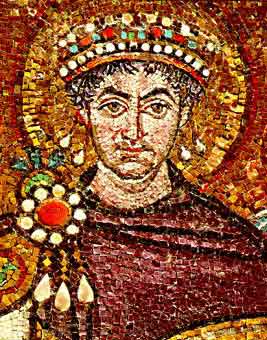
Justinian’s uncle adopted him and also ensured his education. “Justinian was superbly well educated in jurisprudence, theology and Roman history. His military career featured rapid advancement, and a great future opened up for him when, in 518, Justin became emperor. Justinian was appointed consul in 521, and later as commander of the army of the east. He was functioning as virtual regent long before Justin made him associate emperor on April 1, 527. Four months later, Justinian became the sole sovereign upon Justin I's death.” (source) He then made his wife, Theodora, joint ruler of the empire. This proved to be a good decision because she was clever, strong-willed and a good leader. (Millard 92, source)
“The reign of Justinian was an extremely significant period. It marked the final end of the Roman empire; the establishment of the new, Byzantine empire; the beginning of Western Europe's unique position within the civilizations of the Old World; and made possible the spread of Islam and the rise of the Franks…The empire was united under the Eastern emperor in theory; Justinian tried to make it so in fact. His armies invaded the Vandal, Ostrogothic, and Visigothic kingdoms in turn, and, in a series of bitter wars (540-554), re-conquered much of the Mediterranean lands of the West.” (source) “He was the last emperor to attempt to restore the Roman Empire to the territories it enjoyed under Theodosius I.” (source)
Justinian had some architectural achievements as well. The first Hagia Sophia that was built in Constantinople burned down, and he wanted to rebuild it. “Now the Emperor Justinian wanted to rebuild the church in a style that far exceeded the capabilities of any architect of his time. He had the good sense to turn to someone who was not trained as an architect but who was a scholar, knowledgeable in mathematics, statics and dynamics. This person was Anthemius of Tralles, but in Anthemius, the emperor employed someone who was not only a skilled mathematician, but also someone with an artistic genius. Mathematical skills, the ability to teach the builders to accomplish the required tasks, the daring of an innovator, and the vision of an artistic genius combined in Anthemius to produce one of the most beautiful buildings the world has seen.” (source) (Rosen 93)
Although his reign is often called the Golden Age of the Roman Empire, the end of Justinian’s rule was disastrous. A plague hit the people and they were dying quickly. “Procopius gives us a good account of the plague, modeled on Thucydides. This was clearly bubonic rather than the more deadly pulmonary plague, for Procopius indicates that people who cared for the ill did not necessarily contract the plague themselves, and pulmonary plague is directly communicable to another person whereas the bubonic variety is carried by fleas, which live on rodents, particularly the black rat. Nonetheless, bubonic plague is deadly enough: without modern treatment it can result in death in 40 to 70 per cent of its victims.
The plague moved from city to city in the empire. In 558 it returned to Constantinople for a new crop of victims.” (source)
“In fact, the number of natural disasters which befell the empire in Justinian's reign is remarkable: earthquakes, floods and plague… The plague brought a period of economic growth to an end. One estimate suggests that the population of the empire in 600 was only 60 per cent of what it was in 500. The loss of so many taxpayers hurt the treasury, though Justinian does not seem to have greatly curtailed his building program to take declining revenues into consideration. Recruits for the army became harder to find and Justinian had to rely more on barbarian troops.” (source)
Theodora died of cancer in 548, but Justinian lived some years longer, dying in 565. He was not a humble man, (thinking of himself as wiser than Solomon,) but he was smart and a good leader. Even though the plague was a huge tragedy that occurred during his reign, his reign is still thought of as the Golden Age of the Roman Empire. (Now that’s something to be proud of.) (source)
Works Cited
Millard, Dr. Anne and Patricia Vanags. The Usborne Book of World History. London, England: Usborne Publishing Ltd. 1985.
Rosen, William. Justinian’s Flea: The First Great Plague and the End of the Roman Empire. U.S.A.: The Penguin Group. 2007.
Saturday, September 20, 2008
The Magna Carta
On July 27, 1214, King John of England lost an important battle at Bouvines to King Philip II of France. Because of this, he lost any hopes he had of regaining the French lands he had inherited. When he returned, he demanded that the barons who had not joined to help him in the battle pay a fee. These barons protested and condemned his policies, and families began to take sides. King John’s opposition intensified, and he could not refuse the demands of the barons any longer. On June 15, 1215, he agreed to put his seal upon the document that confirmed their liberties. (source, source)
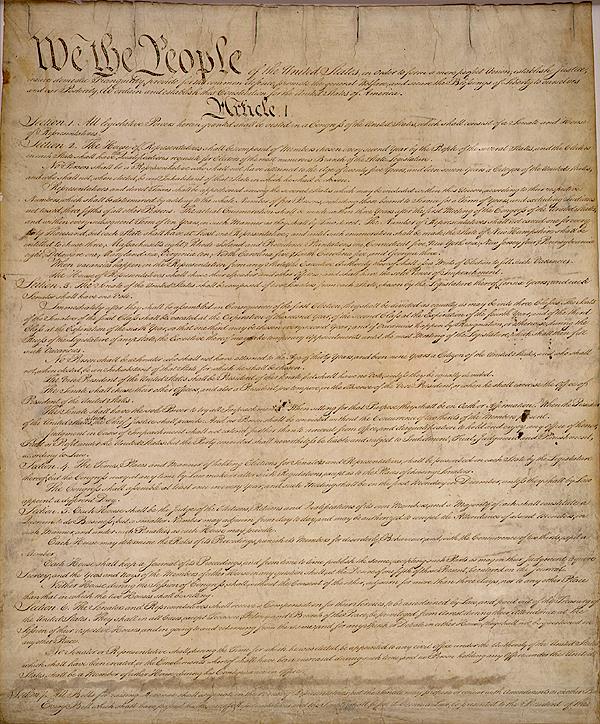
“The document conceded by John and set with his seal in 1215, however, was not what we know today as 'Magna Carta,' but rather a set of baronial stipulations, now lost, known as the ‘Articles of the Barons.’ After John and his barons agreed on the final provisions and additional wording changes, they issued a formal version on June 19, and it is this document that came to be known as 'Magna Carta.' Of great significance to future generations was a minor wording change, the replacement of the term ‘any baron’ with ‘any freeman,’ in stipulating to whom the provisions applied. Over time, it would help justify the application of the Charter's provisions to a greater part of the population. While freemen were a minority in 13th-century England, the term would eventually include all English, just as ‘We the People’ would come to apply to all Americans in this century.” (source)
The document also contained “63 clauses promising all freemen access to courts and a fair trial, eliminating unfair fines and punishments, giving power to the Catholic Church in England, and addressing many lesser issues.” (source) These lesser issues included settling conflicts “between church and monarchy, between individual and the state, between husband and wife, between Jew and Christian, between king and baron, between merchant and consumer, [and] between commoner and privatizer…. Its chapter 39 has grown to embody fundamental principles, habeas corpus, trial by jury, [and] prohibition of torture.” (Linebaugh 45)
The last few sections of the charter “deal with how the Magna Carta would be enforced in England. Twenty-five barons were given the responsibility of making sure the king carried out what was stated in the Magna Carta - the document clearly states that they could use force if they felt it was necessary. [Again,] to give the Magna Carta an impact, the royal seal of King John was put on it to show people that it had his royal support.” (source)
The Magna Carta has been a great influence to Americans, too. “Before penning the Declaration of Independence--the first of the American charters of freedom--in 1776, the Founding Fathers searched for a historical precedent for asserting their rightful liberties from King George III and the English Parliament. They found it in a gathering that took place 561 years earlier on the plains of Runnymede, not far from where Windsor Castle stands today…[the] Magna Carta--a momentous achievement for the English barons and, nearly six centuries later, an inspiration for angry American colonists.” (source) The common American people have looked to this agreement for help, too. A man named Roger B. Taney cited the Magna Carta in an American court 16 times! (Linebaugh 172, 173)
Indeed, the Magna Carta served as a reference point of law for the people of England to go back to if they thought the king was being unfair. This is what America’s Founding Fathers did when they wrote the Declaration of Independence. The charter can be compared to the Constitution, too, in some ways, in that it spelled out the rights of the people. All in all, the Magna Carta, (Latin for “Great Charter,”) was an outstanding document that changed the world and the way it thought about freedom. (Howard 25)
Works Cited
Howard, A. E. Dick. Magna Carta: Text and Commentary. U.S.A.: The University Press of Virginia. 1964.
Linebaugh, Peter. The Magna Carta Manifesto: Liberties and Commons for All. Berkeley and Los Angeles, California: University of California Press. 2008.

The Magna Carta

The Declaration of Independence

The Constitution
“The document conceded by John and set with his seal in 1215, however, was not what we know today as 'Magna Carta,' but rather a set of baronial stipulations, now lost, known as the ‘Articles of the Barons.’ After John and his barons agreed on the final provisions and additional wording changes, they issued a formal version on June 19, and it is this document that came to be known as 'Magna Carta.' Of great significance to future generations was a minor wording change, the replacement of the term ‘any baron’ with ‘any freeman,’ in stipulating to whom the provisions applied. Over time, it would help justify the application of the Charter's provisions to a greater part of the population. While freemen were a minority in 13th-century England, the term would eventually include all English, just as ‘We the People’ would come to apply to all Americans in this century.” (source)
The document also contained “63 clauses promising all freemen access to courts and a fair trial, eliminating unfair fines and punishments, giving power to the Catholic Church in England, and addressing many lesser issues.” (source) These lesser issues included settling conflicts “between church and monarchy, between individual and the state, between husband and wife, between Jew and Christian, between king and baron, between merchant and consumer, [and] between commoner and privatizer…. Its chapter 39 has grown to embody fundamental principles, habeas corpus, trial by jury, [and] prohibition of torture.” (Linebaugh 45)
The last few sections of the charter “deal with how the Magna Carta would be enforced in England. Twenty-five barons were given the responsibility of making sure the king carried out what was stated in the Magna Carta - the document clearly states that they could use force if they felt it was necessary. [Again,] to give the Magna Carta an impact, the royal seal of King John was put on it to show people that it had his royal support.” (source)
The Magna Carta has been a great influence to Americans, too. “Before penning the Declaration of Independence--the first of the American charters of freedom--in 1776, the Founding Fathers searched for a historical precedent for asserting their rightful liberties from King George III and the English Parliament. They found it in a gathering that took place 561 years earlier on the plains of Runnymede, not far from where Windsor Castle stands today…[the] Magna Carta--a momentous achievement for the English barons and, nearly six centuries later, an inspiration for angry American colonists.” (source) The common American people have looked to this agreement for help, too. A man named Roger B. Taney cited the Magna Carta in an American court 16 times! (Linebaugh 172, 173)
Indeed, the Magna Carta served as a reference point of law for the people of England to go back to if they thought the king was being unfair. This is what America’s Founding Fathers did when they wrote the Declaration of Independence. The charter can be compared to the Constitution, too, in some ways, in that it spelled out the rights of the people. All in all, the Magna Carta, (Latin for “Great Charter,”) was an outstanding document that changed the world and the way it thought about freedom. (Howard 25)
Works Cited
Howard, A. E. Dick. Magna Carta: Text and Commentary. U.S.A.: The University Press of Virginia. 1964.
Linebaugh, Peter. The Magna Carta Manifesto: Liberties and Commons for All. Berkeley and Los Angeles, California: University of California Press. 2008.

The Magna Carta

The Declaration of Independence
The Constitution
Saturday, September 13, 2008
Princess Olga of Kiev

Princess Olga was born around 890. Her “origins are not known with certainty, but she may have come from Pskov, [Russia.] She was probably of Varangian (Scandinavian) heritage. Olga married Prince Igor I of Kiev in about 903. Igor was the son of Rurik, who is considered the founder of Russia. Igor became the ruler of Kiev, a state which included parts of what is now Russia, the Ukraine, Byelorussia, and Poland.” (source) However, Igor got greedy. He raised taxes on his subjects by triple! The Derevlians revolted and murdered Igor. (Early)
Looking to gain more power, the Derevlians’ prince Mal asked Olga to come and marry him. Olga was furious, but she concealed it so as not to spoil her plan of revenge. “Olga made this reply, ‘Your proposal is pleasing to me; indeed my husband cannot rise again from the dead. But I desire to honor you tomorrow in the presence of my people.’ Olga pretended to show them great honor by having her men carry the Drevlians' boats from the river Dniepr towards the Prince's residence... and straight into a huge pit. She then commanded that they should be buried there alive, and they were thus buried.” (source)
“Olga then sent messages to the Derevlians to the effect that, if they really required her presence, they should send after her their distinguished men, so that she might go to their Prince with due honor, for otherwise her people in Kiev would not let her go. When the Derevlians heard this message, they gathered together the best men who governed the land of Dereva, and sent them to her. When the Derevlians arrived, Olga commanded that a bath should be made ready, and invited them to appear before her after they had bathed. The bathhouse was then heated, and the Derevlians entered in to bathe. Olga's men closed up the bathhouse behind them, and she gave orders to set it on fire from the doors, so that the Derevlians were all burned to death.” (source)
However, Princess Olga was still angry. “Olga sent another message to Prince Mal, saying she was coming at last. But she wanted to mourn at Igor's gravesite and give him a proper memorial with the traditional banquet. She asked Mal and his favored men to be her guests, and to bring plenty of mead. Once finding Igor's grave, Olga's men got busy building a proper burial mound while she wept like a dutiful wife. When the funeral rites were complete, she went with Mal to the hall for the feast. Mal inquired about the escorts that he had sent her, and Olga told him that they were on the way accompanied by her personal bodyguards. Olga and her people hosted the Drevlians and kept the mead flowing. Prince Mal and his men were so happy that everything seemed to be going their way that they never noticed how little drink was being consumed by Olga and her companions. When the Drevlians were finally incapacitated by mead, Olga's men went about with swords and killed every single Drevlian in the hall. It is estimated by historians that several hundred men were killed that night alone.” (source)
Nevertheless, the princess was still unsatisfied and as infuriated as ever. It seemed that no amount of Drevlian deaths could avenge the death of her one husband. She asked the Drevlians to give her three pigeons and three sparrows from each house as a tribute. They gladly agreed. “Now Olga gave to each soldier in her army a pigeon or a sparrow, and ordered them to attach by thread to each pigeon and sparrow a piece of sulfur bound with small pieces of cloth. When night fell, Olga bade her soldiers release the pigeons and the sparrows. So the birds flew to their nests, the pigeons to the cotes, and the sparrows under the eaves…[and set the houses on fire.] There was not a house that was not consumed, and it was impossible to extinguish the flames, because all the houses caught on fire at once. The people fled from the city, and Olga ordered her soldiers to catch them. Thus she took the city and burned it, and captured the elders of the city. Some of the other captives she killed, while some she gave to others as slaves to her followers.” (source) She made the rest pay a heavy tribute. Finally, Olga settled down to rule as regent until her son, Svyatoslav, was of age in 964. (source)
“In 957, she visited Emperor Constantine VII in Constantinople. He admired her looks and intelligence, noting to her that 'You are fit to reign in this city with us.'…[Later, she became a Christian and agreed to be baptized.] Before her baptism, Constantine asked her hand in marriage, but Olga deferred, claiming that she wanted to be baptised an Orthodox Christian first. Again, after the baptism, Constantine requested her hand in marriage, but the quick-thinking Olga tricked him (since he was her godfather in baptism), noting that he called her his daughter in baptism and so such a union is forbidden under Christian law.” (source)
“After Princess Olga returned to Kiev, she was unsuccessful in converting her son or very many others. Her example, however, may have helped to influence her grandson, Vladimir I, who was the third son of Svyatoslav” (source) and was in line for the crown. “The city of Kiev became the political and religious center of Russia.” (Hicks 333)
 “Princess Olga died, probably on July 11, 969. She is considered the first saint of the Russian Orthodox Church. Her relics were lost in the 18th century,” (source)but monuments of her still remain.
 Works Cited
“Early Russia & the Fall of Constantinople” Movie. (The one where the guy dresses up.)
Hicks, Laurel Elizabeth. Old World History & Geography in Christian Perspective. U.S.A., A Beka Book. 1999.

Friday, September 12, 2008
Friday, August 29, 2008
Eleanor of Aquitaine

Map of Aquitaine
Eleanor of Aquitaine was born in 1122 to Aenor of Chatellerault and William X of Aquitaine. “In July 1137, just a few months after the death of her father, Eleanor of Aquitaine married Louis [VII, both of them teenagers,] heir to the throne of France. He became the king of France when his father died less than a month later.” (source)
“As Queen, Eleanor was famous for her beauty and wit. During their 15-year marriage she bore Louis two daughters and exercised considerable influence over her mild husband. In 1147 she coaxed him into undertaking a Crusade.” (source) Her grandfather had fought in the first Crusade, and she was determined to be a part of the second one. “At age 19, she knelt in the cathedral of Vézelay before the celebrated Abbé Bernard of Clairvaux offering him thousands of her vassals for the Second Crusade. It was said that Queen Eleanor appeared at Vézelay dressed like an Amazon galloping through the crowds on a white horse, urging them to join the crusades. While the church may have been pleased to receive her thousand fighting vassals, they were less happy when they learned that Eleanor, attended by 300 of her ladies, also planned to go to help ‘tend the wounded.’” Commentators throughout her adventure criticized the presence of Eleanor, her ladies and wagons of female servants. The women never fought, but they were dressed in armor and carrying lances. (book source, source, Millard 102.)
In Antioch, Eleanor caused a scandal by paying more attention to her handsome and interesting Uncle Raymond than to her husband. She asked for her marriage to be annulled on the terms that they were so closely related that the marriage was prohibited by the Church. Louis VII was furious and made her ride with him to Jerusalem even though she wanted to stay back with Raymond. However, his expedition failed and the couple rode in separate ships back to France. On the way home while resting in Sicily, she was brought the news that Raymond had been killed in battle. In 1152, her request for divorce was granted and she remarried eight weeks later. This time “Eleanor married Henry, duke of Normandy and count of Anjou, uniting her vast possessions with those of her husband. Louis VII feared this powerful combination, and when Henry ascended the English throne in 1154, the stage was set for a long struggle between the English and French kings.” (source) (source, source)
“For the next thirteen years Eleanor constantly bore Henry children, five sons and three daughters… However, all was not well between Henry and Eleanor. When her older sons were of age, her estrangement from her husband grew. In 1173 she led three of her sons in a rebellion against Henry, surprising him with this act of aggression so seemingly unusual for a woman. In her eyes it was justified… Eleanor may have hoped that her prize would have been the right to rule Aquitaine with her beloved third son Richard, and without Henry. The rebellion was put down, however, and fifty-year-old Eleanor was imprisoned by Henry in various fortified buildings for the next fifteen years.” (source)
An interesting twist in her life occurred when Henry died in 1189. “On the accession of her son Richard I to kingship, Eleanor's fortunes rose again. When Richard was fighting…she repeatedly intervened to defend his lands - even against her son John… Her relentless work on behalf of her favorite son increased her fame as an extremely able politician.” (source) “When her son John joined forces with the King of France in rising against his brother King Richard, Eleanor backed Richard and helped bolster his rule when he was on crusade. In 1199 she supported John's claim to the throne against her grandson Arthur of Brittany (Geoffrey's son). Eleanor was 80 years old when she helped hold out against Geoffrey's forces until John could arrive, defeating Arthur and his supporters. In 1204, John lost Normandy, but Eleanor's European holdings remained secure.” (source)
“Eleanor died in 1204 at her favorite religious house, the abbey of Fontevrault, where she had retreated to find peace during various moments of her life.” (source) She lived a life of 82 years that changed history forever. Eleanor of Aquitaine is definitely a very interesting character to study.
Works Cited
Link to video at the end of the 2nd paragraph labeled "book source"
Millard, Dr. Anne and Patricia Vanags. The Usborne Book of World History. London, England: Usborne Publishing Ltd. 1985.

Saturday, August 23, 2008
The Part of the Middle Ages Most Interesting to Me
The part of the Middle Ages that is most interesting to me is the Carolingian Empire. Many important things happened during this time that would change the world. Below is a timeline to help you organize the dates in your head.
“The Middle Ages -- 500 A.D. - 1500 A.D.
A. Transition Period, 500 - 700 A.D.
B. Carolingian Empire, 700 - 900 A.D.
C. Feudalism, 900 - 1100 A.D.
D. High Middle Ages, 1100 - 1300 A.D.
E. Late Middle Ages, 1300 - 1500 A.D.” (source)
Before he died in 768, Pepin III divided his Frankish kingdom and gave it to his two sons. Charlemagne got the outer areas of Frankland, and his younger brother received the settled, more secure inner areas. There was much friction between the two until the younger brother died in 771. (source)
Charlemagne was a great military leader and conquered so many lands and people (much of central and western Europe) that others held great fear of him. “Having acquired more territory than any other European monarch of his times, Charlemagne was forced to create new positions and adapt old offices to suit new necessities. He delegated authority over provinces to worthy Frankish nobles. Yet he also understood that the various people he had brought together in one nation were still members of distinct ethnic groups, and he allowed each group to retain its own laws in local areas. To ensure justice, he saw to it that each group's laws were set down in writing and carefully enforced. He also issued capitularies, decrees that applied to everyone in the realm regardless of ethnicity.” (source)
Charlemagne did not have an extensive education, but he understood that it was very valuable. He also saw that education was in a serious decline. “Charlemagne started a school at Aix-la-Chapelle, where he invited students from all over the kingdom to learn. Although the school was established for sons of nobles, he believed that all children should have a chance to learn, so he allowed all children to enroll. He often pointed out that the poorer students did better than the students who were better off. The reputation of the Palace School spread throughout Europe. Students from all across Europe came to the school. Charlemagne picked Alcuin, a monk from England to revise the educational system. Alcuin wrote new textbooks to replace the older ones, and started to train new teachers. By the time of Alcuin's retirement, Charlemagne could offer universal free education… The school at Aix-la-Chapelle soon became a college. Lectures, poetry readings, and conversation…[were] prevalent there.” (source)
However, “this ‘Carolingian Renaissance’ was an isolated phenomenon. Learning did not catch fire throughout Europe. Only in the royal court, monasteries and schools was there any real focus on education. Yet because of Charlemagne's interest in preserving and reviving knowledge, a wealth of ancient manuscripts were copied for future generations. Just as important, a tradition of learning was established in European monastic communities… overcoming the threat of the extinction of Latin culture. While their isolation from the Roman Catholic Church sent the famous Irish monasteries into decline, European monasteries were firmly established as keepers of knowledge thanks in part to the Frankish king.” (source)
In 799, Pope Leo was accused with crime. The people wanted to blind him and cut out his tongue. “However, Leo escaped and fled to the protection of Charlemagne at Paderborn. Precisely what, if any, negotiations took place remains unknown, but shortly thereafter Pope Leo returned to Rome under a safe escort. In November, a commission controlled by the Frankish king arrested and deported Leo's assailants and discredited the accusations that had been made against him.” (source) “On Christmas Day of the year 800, the pope -- supposedly unexpectedly -- placed a tiara on Charlemagne's head and acclaimed him Holy Roman Emperor. It has been remarked that the realm was neither holy, nor Roman, nor an empire, but it lasted for over a thousand years.” (source)
The Middle Ages is a very interesting time, and the Carolingian Empire is a huge example of that. I think it is amazing that Charlemagne conquered more land during this time than any other European monarch. He also stopped the decline of learning even though he was not extremely well educated himself. I also think it is interesting how he did not want the title of emperor, but was content living as a king. That’s pretty unusual.
“The Middle Ages -- 500 A.D. - 1500 A.D.
A. Transition Period, 500 - 700 A.D.
B. Carolingian Empire, 700 - 900 A.D.
C. Feudalism, 900 - 1100 A.D.
D. High Middle Ages, 1100 - 1300 A.D.
E. Late Middle Ages, 1300 - 1500 A.D.” (source)
Before he died in 768, Pepin III divided his Frankish kingdom and gave it to his two sons. Charlemagne got the outer areas of Frankland, and his younger brother received the settled, more secure inner areas. There was much friction between the two until the younger brother died in 771. (source)
Charlemagne was a great military leader and conquered so many lands and people (much of central and western Europe) that others held great fear of him. “Having acquired more territory than any other European monarch of his times, Charlemagne was forced to create new positions and adapt old offices to suit new necessities. He delegated authority over provinces to worthy Frankish nobles. Yet he also understood that the various people he had brought together in one nation were still members of distinct ethnic groups, and he allowed each group to retain its own laws in local areas. To ensure justice, he saw to it that each group's laws were set down in writing and carefully enforced. He also issued capitularies, decrees that applied to everyone in the realm regardless of ethnicity.” (source)
Charlemagne did not have an extensive education, but he understood that it was very valuable. He also saw that education was in a serious decline. “Charlemagne started a school at Aix-la-Chapelle, where he invited students from all over the kingdom to learn. Although the school was established for sons of nobles, he believed that all children should have a chance to learn, so he allowed all children to enroll. He often pointed out that the poorer students did better than the students who were better off. The reputation of the Palace School spread throughout Europe. Students from all across Europe came to the school. Charlemagne picked Alcuin, a monk from England to revise the educational system. Alcuin wrote new textbooks to replace the older ones, and started to train new teachers. By the time of Alcuin's retirement, Charlemagne could offer universal free education… The school at Aix-la-Chapelle soon became a college. Lectures, poetry readings, and conversation…[were] prevalent there.” (source)
However, “this ‘Carolingian Renaissance’ was an isolated phenomenon. Learning did not catch fire throughout Europe. Only in the royal court, monasteries and schools was there any real focus on education. Yet because of Charlemagne's interest in preserving and reviving knowledge, a wealth of ancient manuscripts were copied for future generations. Just as important, a tradition of learning was established in European monastic communities… overcoming the threat of the extinction of Latin culture. While their isolation from the Roman Catholic Church sent the famous Irish monasteries into decline, European monasteries were firmly established as keepers of knowledge thanks in part to the Frankish king.” (source)
In 799, Pope Leo was accused with crime. The people wanted to blind him and cut out his tongue. “However, Leo escaped and fled to the protection of Charlemagne at Paderborn. Precisely what, if any, negotiations took place remains unknown, but shortly thereafter Pope Leo returned to Rome under a safe escort. In November, a commission controlled by the Frankish king arrested and deported Leo's assailants and discredited the accusations that had been made against him.” (source)
 “On Christmas Day of the year 800, the pope -- supposedly unexpectedly -- placed a tiara on Charlemagne's head and acclaimed him Holy Roman Emperor. It has been remarked that the realm was neither holy, nor Roman, nor an empire, but it lasted for over a thousand years.” (source)
The Middle Ages is a very interesting time, and the Carolingian Empire is a huge example of that. I think it is amazing that Charlemagne conquered more land during this time than any other European monarch. He also stopped the decline of learning even though he was not extremely well educated himself. I also think it is interesting how he did not want the title of emperor, but was content living as a king. That’s pretty unusual.
Friday, August 22, 2008
Well, Here Goes
It's the beginning of the 08-09 school year, everybody! Yay. For all of you who are frightened by my strange cat pictures, I have some good news. I'm actually going to start posting intelligent WORDS on here now. Well, hopefully intelligent. Enjoy/be scared out of your mind even more. It all depends...
Yours truly,
The crazy person whose thoughts make no sense to other people.
(I willingly admit.)
Yours truly,
The crazy person whose thoughts make no sense to other people.
(I willingly admit.)
Sunday, June 15, 2008
The Following 18 Posts Were Neccessary to Post
I just couldn't help myself.
My actual posts with words are after these 18 pics...
:)
What can I say?
My actual posts with words are after these 18 pics...
:)
What can I say?

Subscribe to:
Posts (Atom)